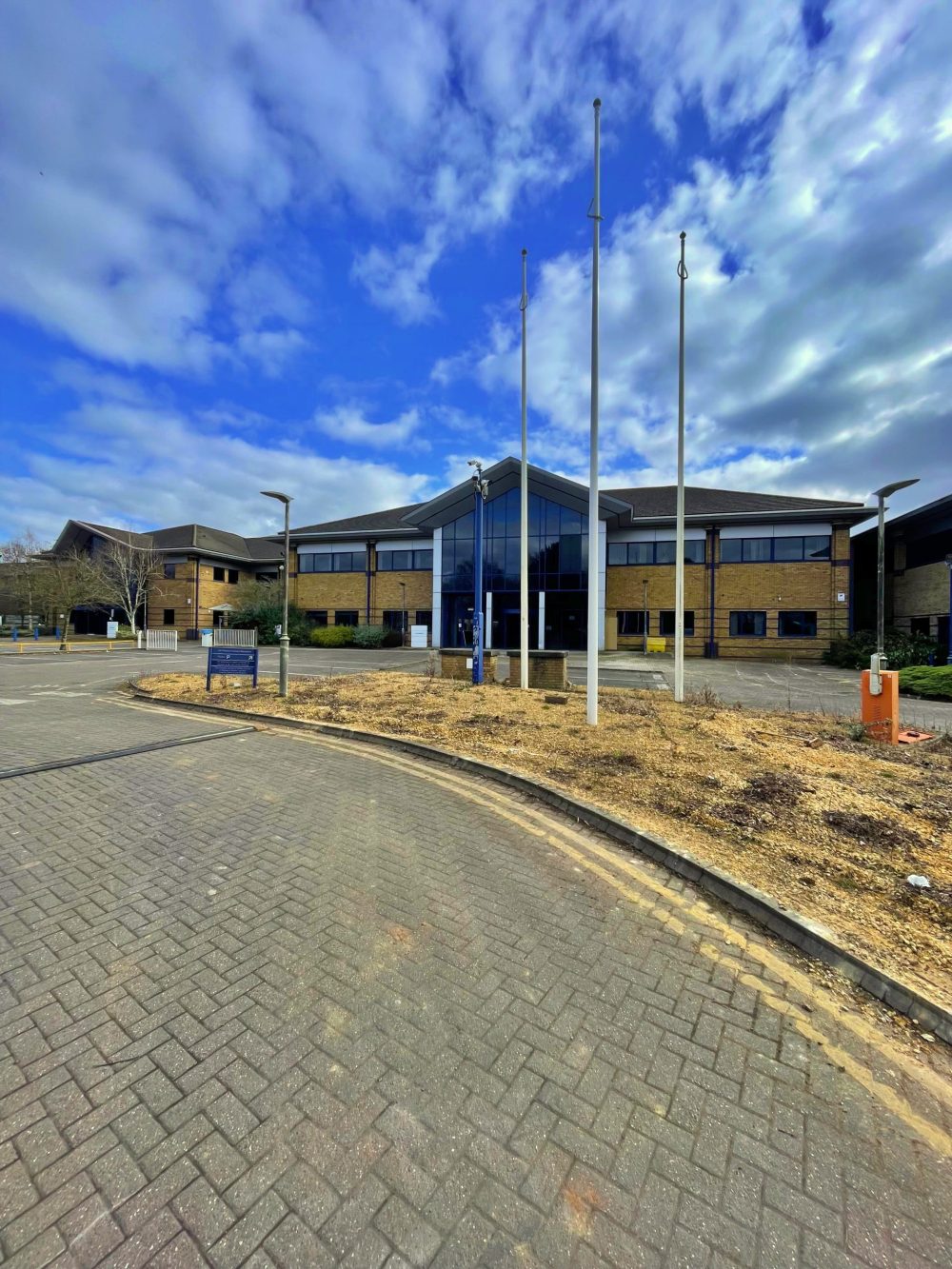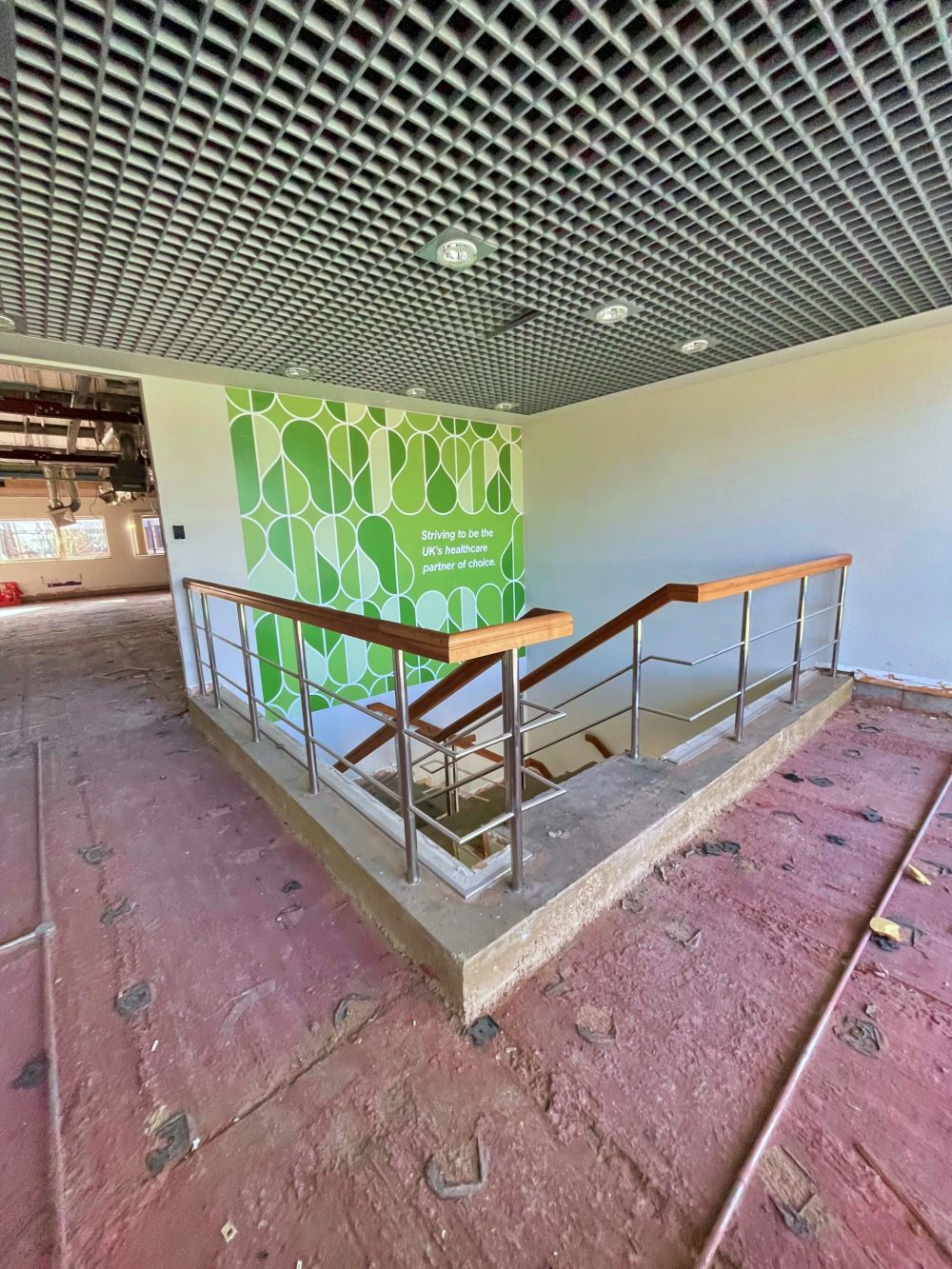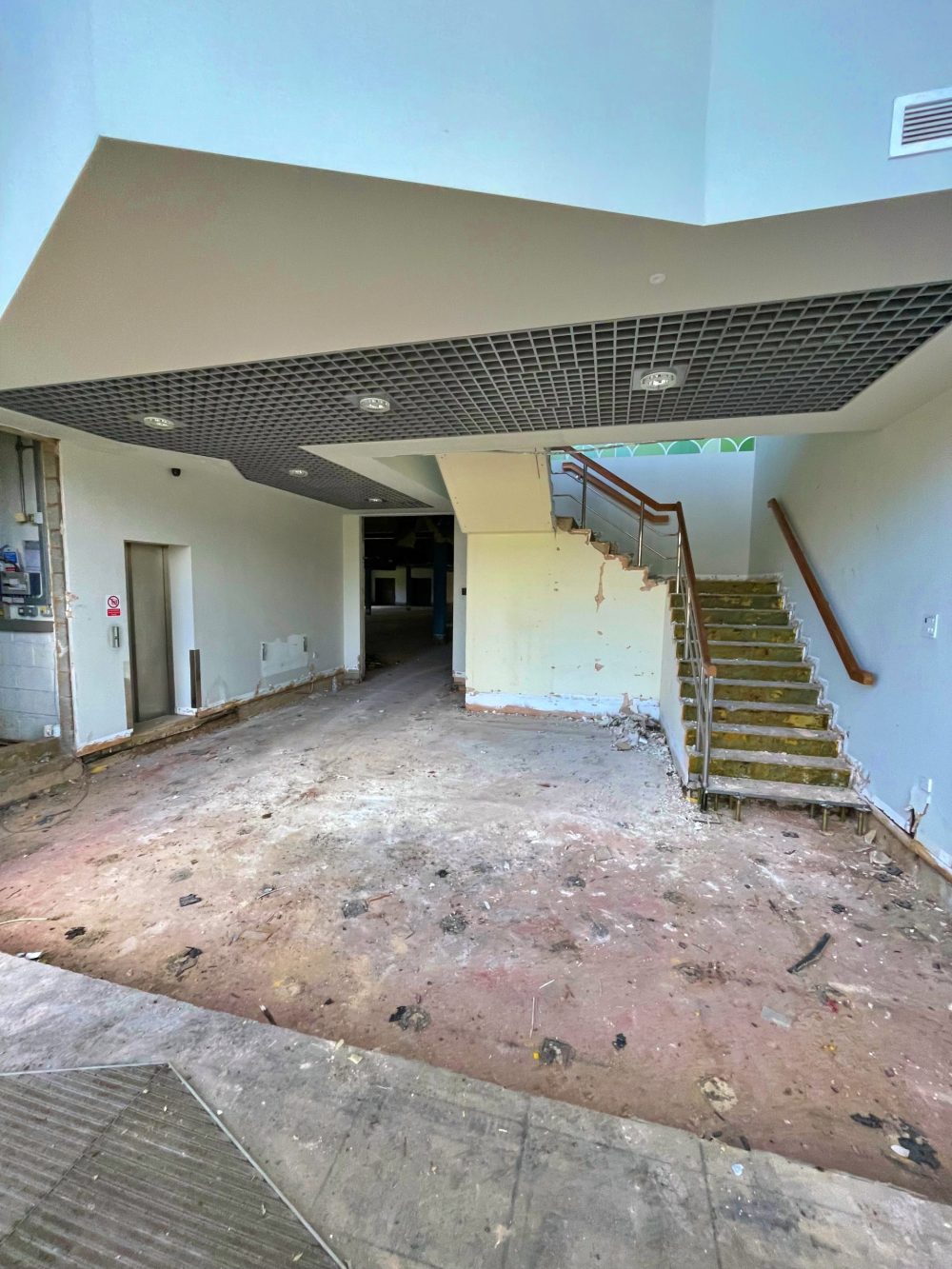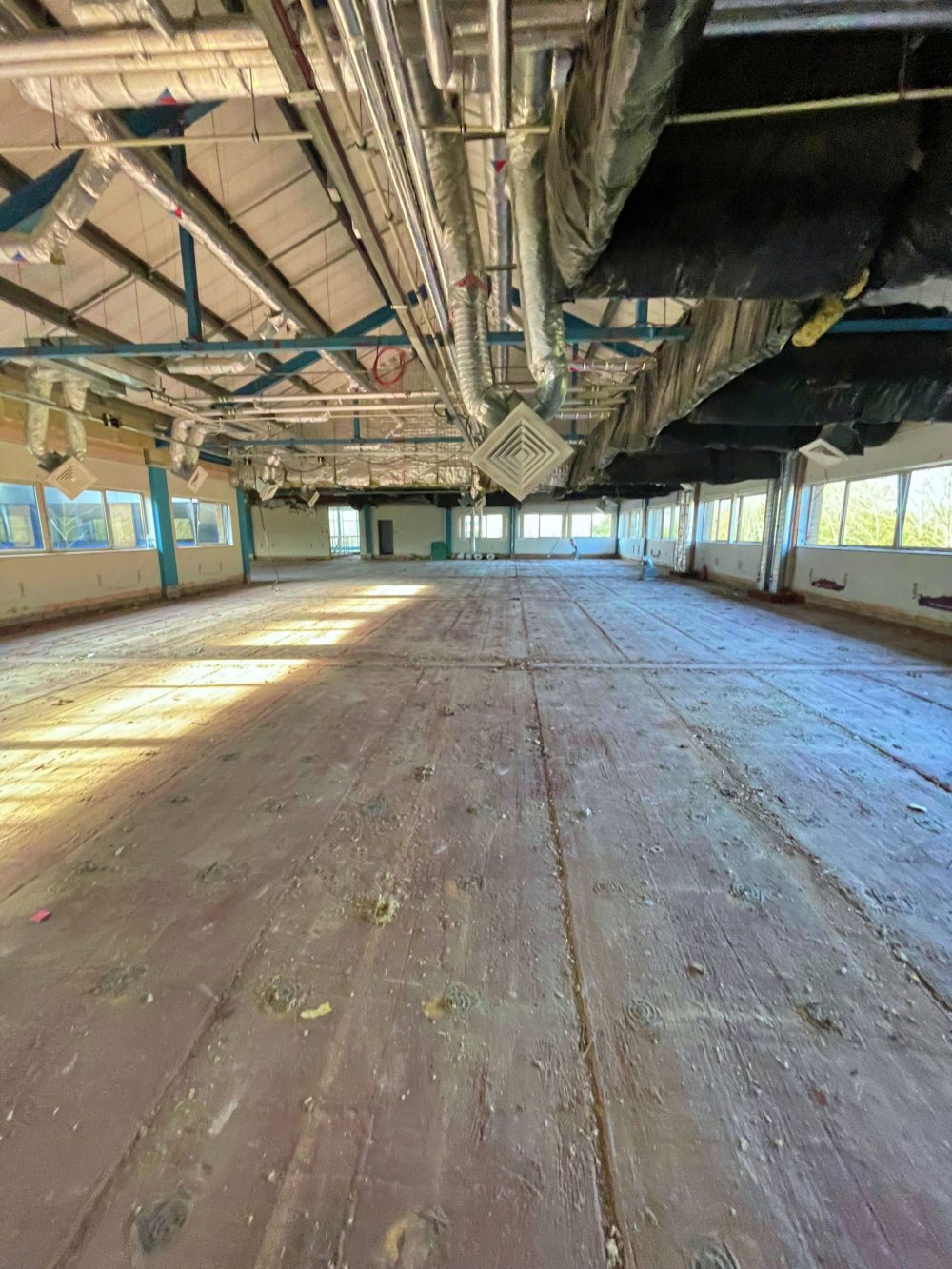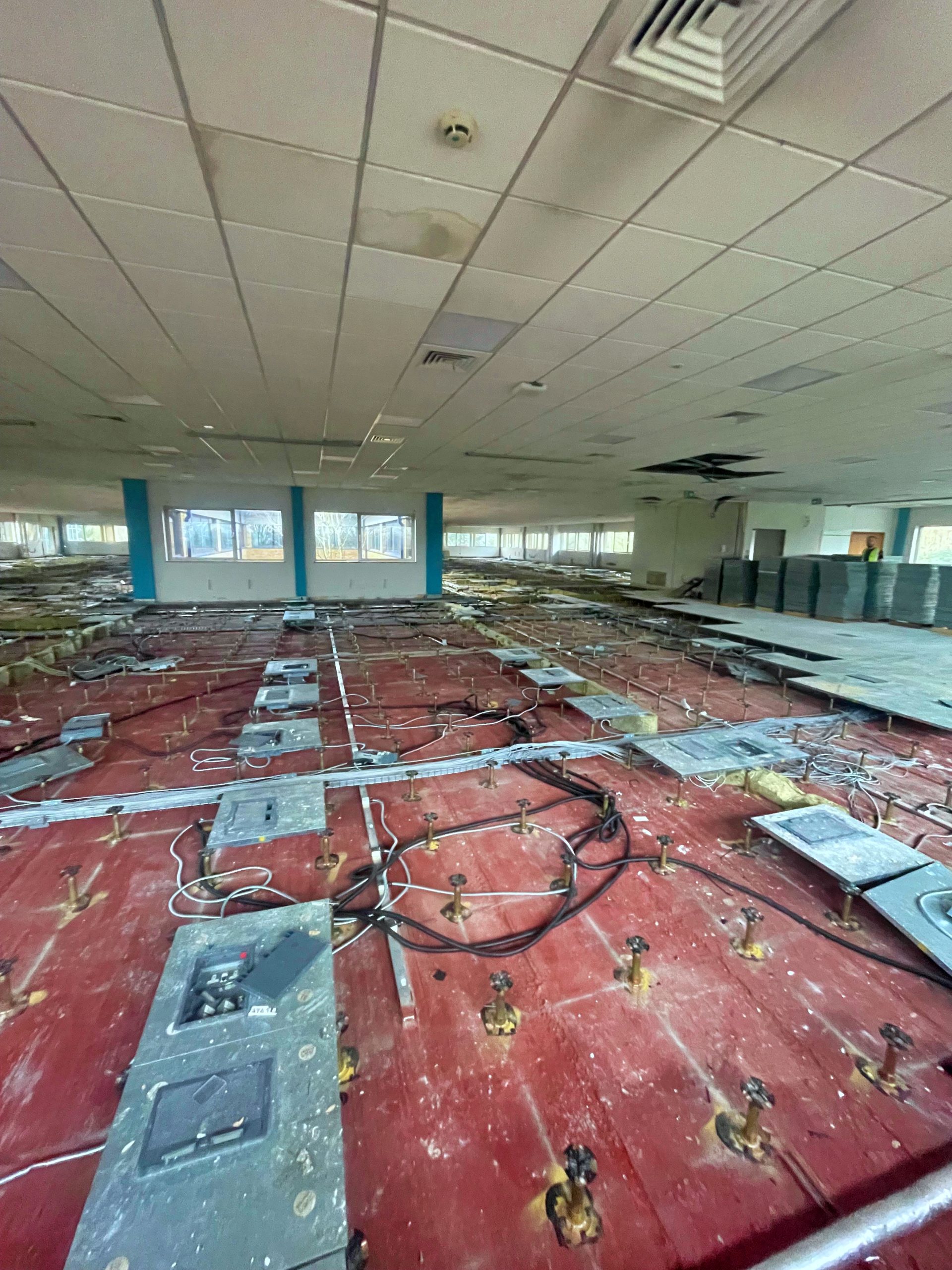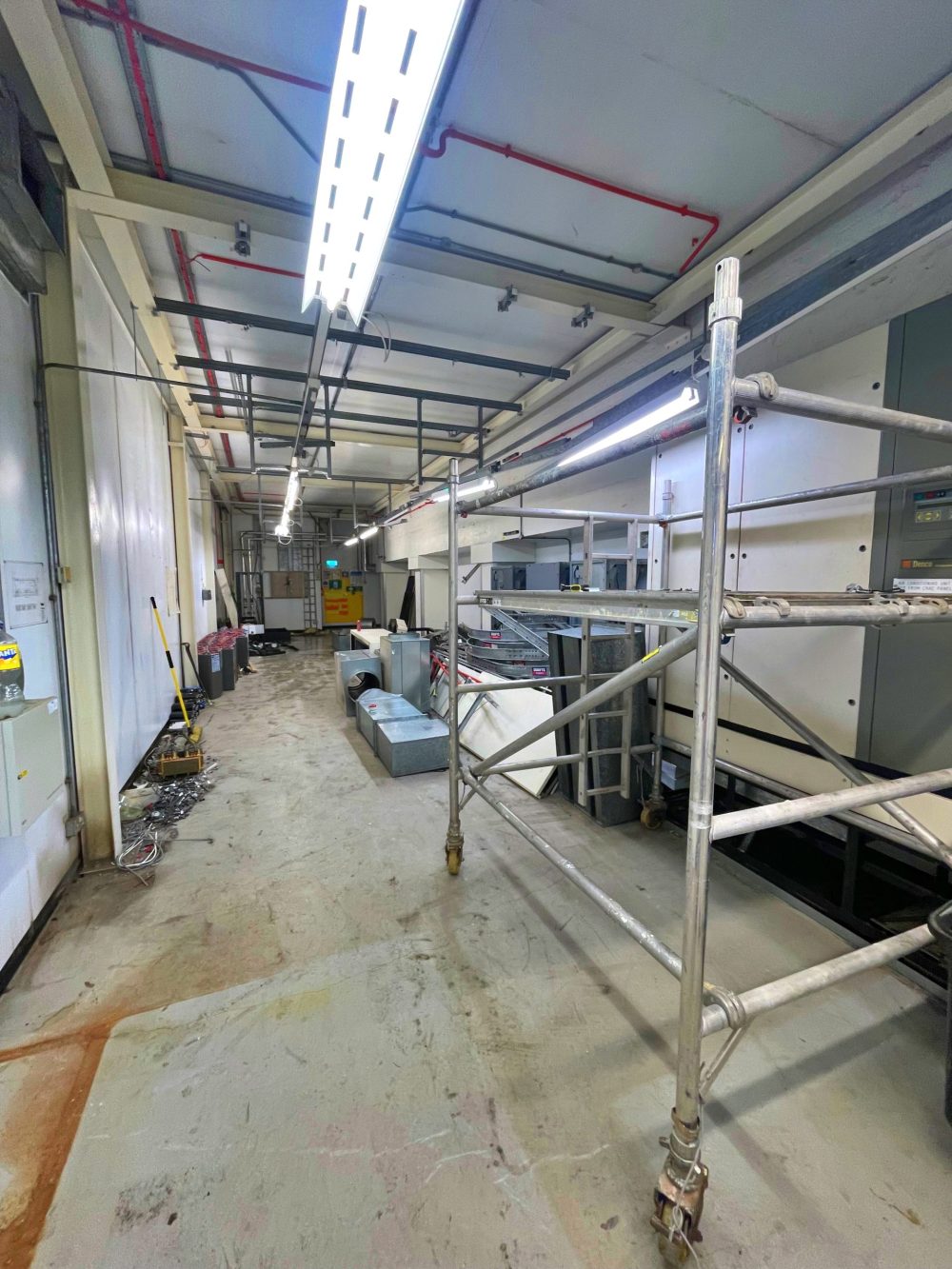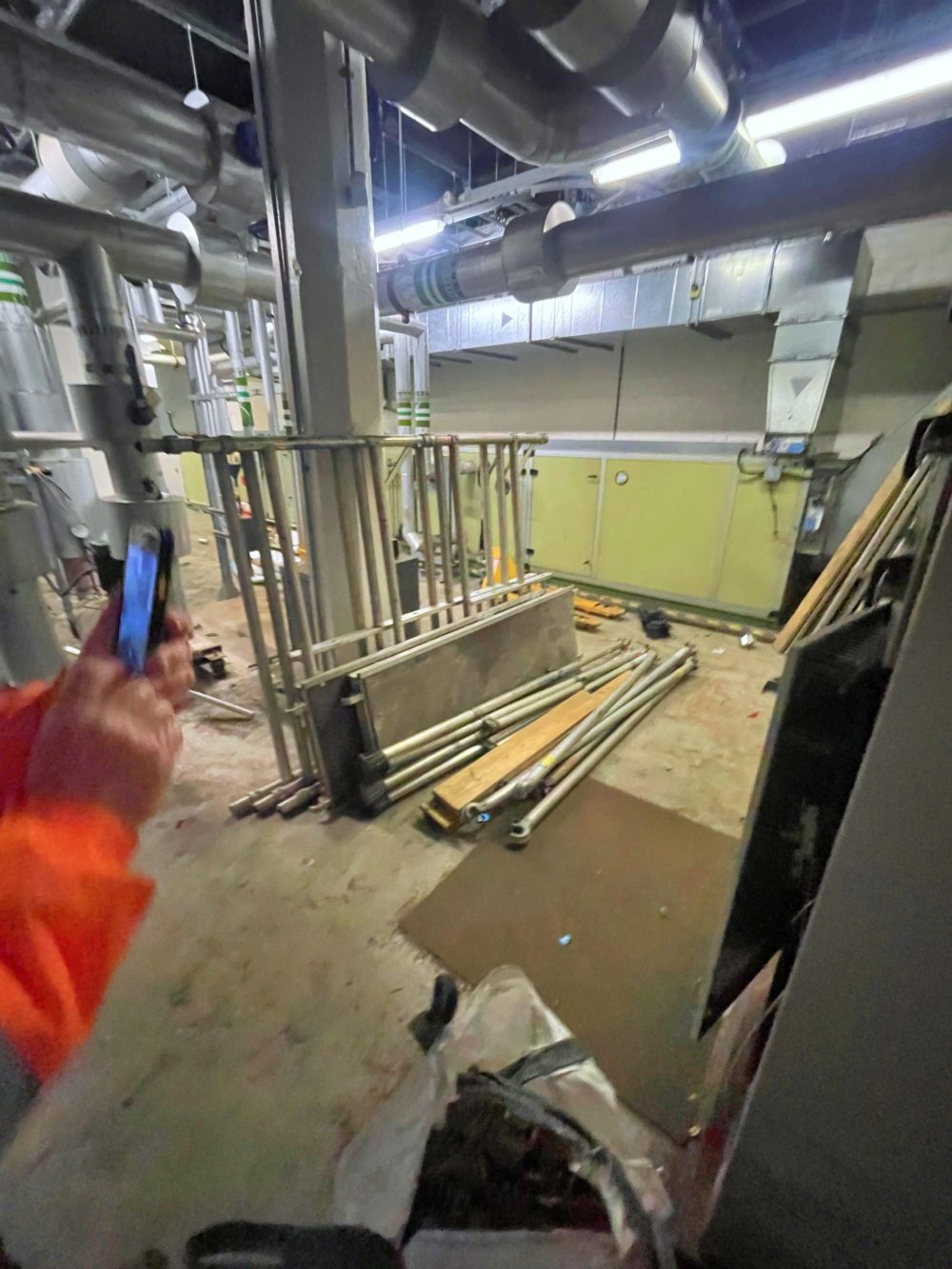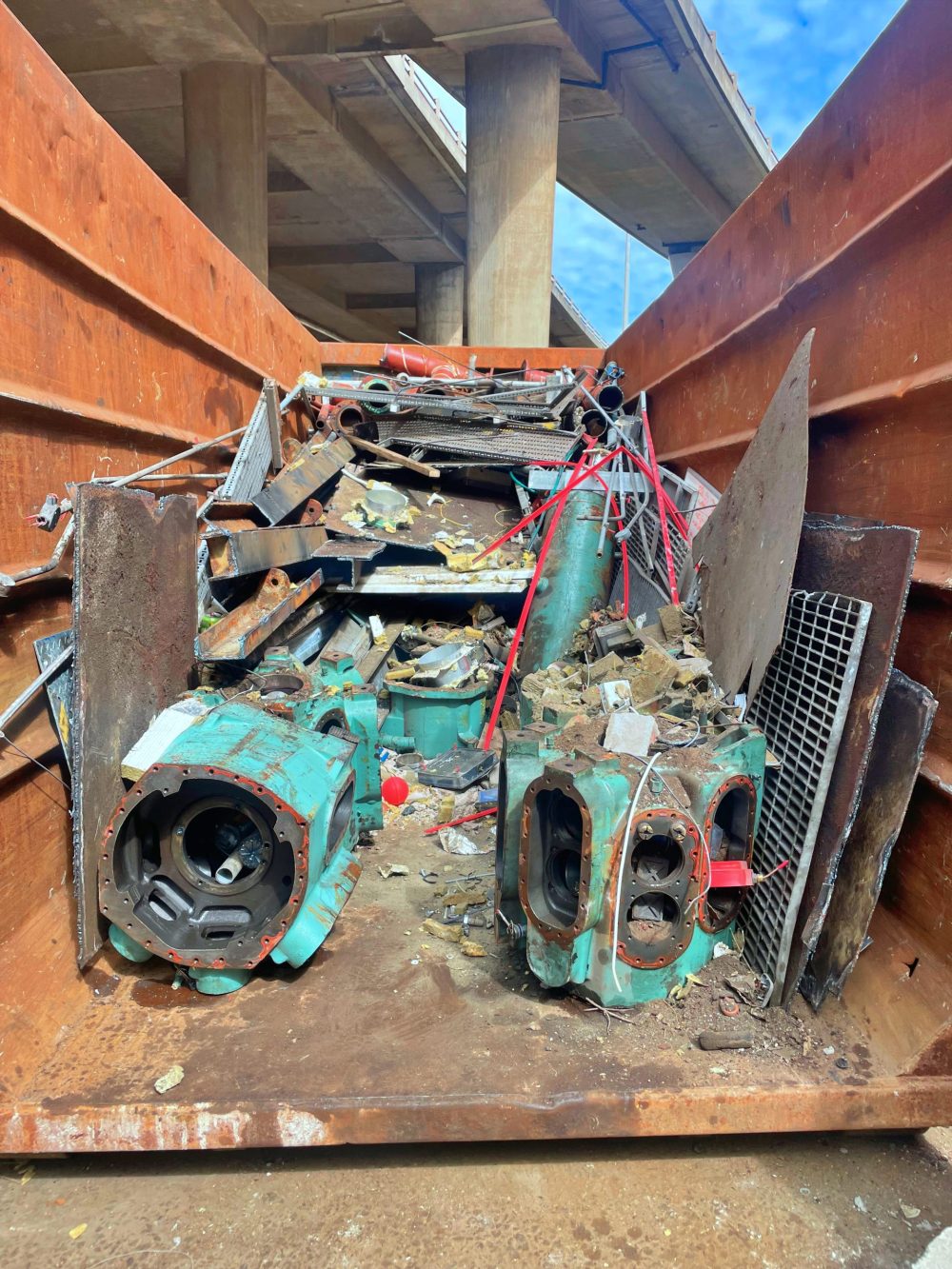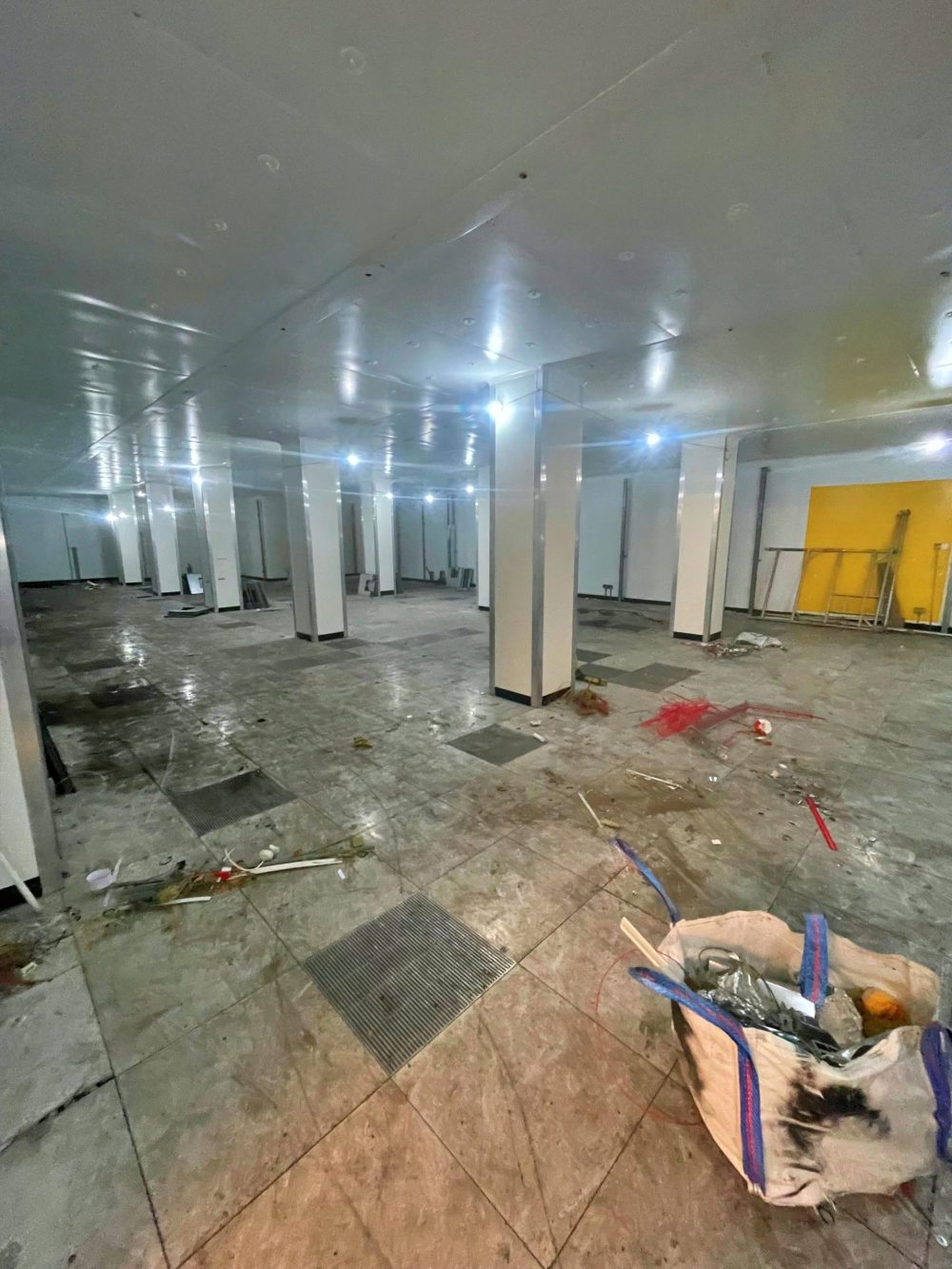
This 12-week project involved the complete strip-out of a two-storey office building, subdivided into three sections. The scope included the removal of all furniture, partitions, mechanical and electrical installations, and raised computer flooring. Prior to commencement, the fire prevention system had to be safely de-gassed. As power to the building was off and lifts unavailable, lifting equipment was used to lower the gas cylinders by stair, ensuring safe removal in line with regulations.
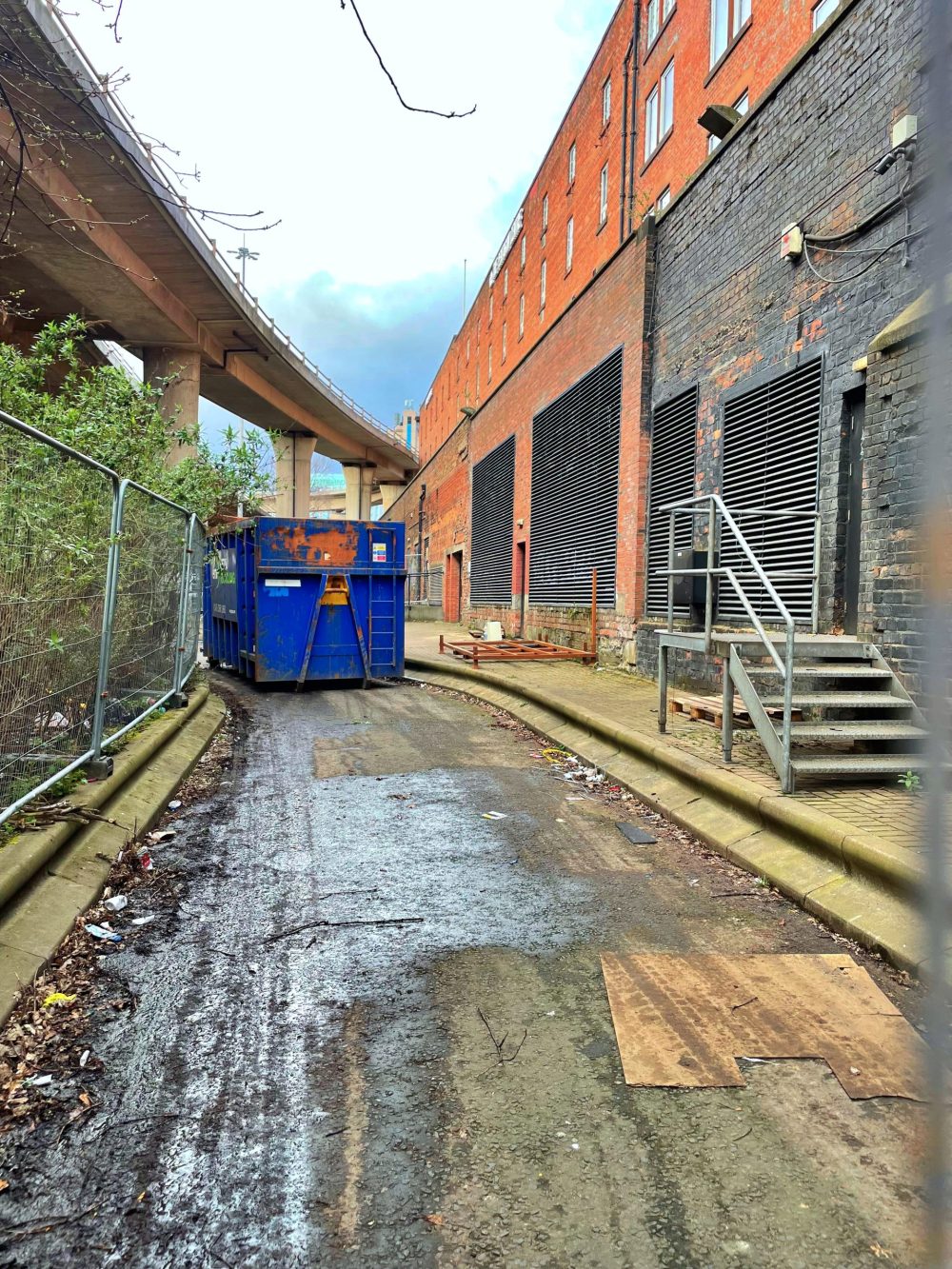
The work required a team of 12 operatives, supported by a skid steer for internal waste handling on the ground floor. Drop zones were established and securely fenced off to manage waste movement, and a 13-tonne excavator was used to load skips where access from upper floors was not possible. Segregation and exclusion zones ensured a safe working environment throughout.
Sustainability was a key feature of this project, with 18,000 carpet tiles and large volumes of computer flooring salvaged for reuse. Originally, a telescopic handler was planned for moving salvaged materials, but due to restrictions on glass removal, methods had to be adapted. RAMS were revised, additional operatives brought in, and the materials were manually transferred via stairs, ensuring compliance with client requirements and maintaining the programme.
The project was completed safely, within the planned 12-week timeframe, and without incident. Despite access restrictions and client constraints, works were adapted effectively through revised RAMS and additional resourcing. The client benefited from both a safe, compliant delivery and significant sustainable salvage of materials, with thousands of carpet tiles and raised flooring recovered for reuse.
This 8-week office strip-out was completed within the agreed timeframe. Due to the location, the team stayed in Glasgow for 12-day periods to ensure programme certainty. The works included stripping offices back to blockwork, removing all mechanical and electrical installations, and dismantling raised computer flooring. The flooring was carefully salvaged for reuse, supporting sustainable waste practices.
The project took place on the ground floor of a live building containing over 300 occupied offices, making health and safety and minimising disruption the highest priorities. Acoustic barriers and other noise control measures were considered to reduce disturbance to office workers. Segregation was maintained at all times, ensuring a clear separation between work areas and public or occupied spaces. Thorough checks were carried out before each stage, and all activities were closely coordinated with building management.
Logistical challenges included limited skip space and restricted movement of materials, particularly the removal of large M&E items. These issues were managed through daily coordination with the skip supplier and neighbouring businesses, and by using trolleys, carts, and lifting equipment to move materials safely within tight spaces. Careful planning and clear communication allowed these challenges to be resolved without impacting progress.
The project was completed safely, on time, and without incident, despite operating in a live environment. Noise and disruption to surrounding offices were kept to a minimum, segregation maintained safety for all building users, and waste management was handled efficiently. The client was pleased with the professional approach and successful delivery of the works.
Bingley Demolition Ltd delivers professional, safety-focused demolition solutions, trusted for on-time, on-budget performance, expert project management, and outstanding client service from initial costing to final completion.



Waltham House, 20a Clyde Street, Bingley, West Yorkshire, UK BD16 2NT
01274 568753
info@bingleydemolition.com
Designed & Built by Freedom Search